Introduction
Running Google Ads can help a business reach people who are already searching. But managing paid campaigns takes time, testing, and careful tracking.
A Google Ads Agency helps businesses plan, launch, manage, and improve their paid search campaigns. An agency may handle keyword research, ad copy, bidding, conversion tracking, landing pages, and reports.
For US businesses, the right PPC setup can help connect ad spend with real business goals. However, results depend on many factors, including the market, offer, budget, competition, targeting, and website experience.
This guide explains how Google Ads works, what agencies do, what services they offer, and how to choose one.
What Is a Google Ads Agency?
A Google Ads agency is a company that manages paid advertising campaigns on Google’s advertising platforms.
The Google Ads Agency works with a business to plan and manage campaigns. It may also review an existing Google Ads account and find areas that need improvement.
Common agency tasks include:
- Keyword research
- Campaign setup
- Ad creation
- Budget management
- Bid management
- Conversion tracking
- Search term reviews
- Landing page reviews
- Campaign testing
- Performance reporting
- Ongoing optimisation
The business pays Google for its advertising. The agency usually charges a separate management or service fee.
A good agency should focus on business goals, not just clicks. Leads, sales, calls, and other useful actions can matter more than traffic alone.
How Does Google Ads Work?
Google Ads lets businesses show paid ads to potential customers. Search campaigns can reach people when their searches match eligible keywords and targeting settings.
The basic process looks like this:
- The business chooses a campaign goal.
- Keywords or other targeting signals are selected.
- Ads and assets are created.
- A user searches or meets the campaign targeting criteria.
- Eligible ads enter Google’s auction.
- Google decides which ads can show.
- The business measures the results.
Several factors can affect campaign performance.
These include:
- Keywords
- Match types
- Negative keywords
- Location
- Budget
- Bidding
- Ad relevance
- Landing pages
- Conversion goals
So, launching an ad is only the first step. Campaigns need regular review and improvement.
What Does a Google Ads Agency Do?
A Google Ads agency can manage many parts of a PPC campaign.
Account Setup
The agency can create a new Google Ads account or review an existing one.
It may check account structure, settings, tracking, campaigns, and targeting before making changes.
Campaign Strategy
The agency chooses a campaign approach based on the business goal.
For example, a local service business may focus on leads and phone calls. An ecommerce store may focus on product sales.
Keyword Research
Keyword research helps identify searches related to the business.
The agency looks for relevant searches that match the products or services being promoted.
Search Term Research
Search terms show what people actually searched before seeing an ad.
Reviewing them can help identify useful searches and irrelevant traffic.
Negative Keywords
Negative keywords can help prevent ads from showing for unwanted searches.
This can help businesses reduce irrelevant clicks and protect their ad budget.
Ad Copy
The agency writes ad headlines and descriptions that match the search and offer.
Good ad copy should be clear and relevant. It should also give users a reason to take the next step.
Landing Page Review
The landing page should support the ad.
For example, an ad for emergency plumbing should lead to a relevant plumbing page. Sending every visitor to the homepage may not be the best choice.
Conversion Tracking
Conversion tracking helps measure useful actions.
These may include:
- Purchases
- Lead forms
- Phone calls
- Sign-ups
- Downloads
Without proper tracking, it can be hard to understand which campaigns create business value.
Bid Management
Google Ads offers different bidding options.
An agency can review bidding settings and adjust campaigns based on available data and business goals.
Campaign Testing
Testing can include:
- Ad copy
- Keywords
- Landing pages
- Bidding
- Targeting
- Campaign settings
Testing helps an agency learn what works and what needs improvement.
Reporting
A Google Ads report should explain more than how many clicks occurred.
It should connect campaign data with useful business metrics.
Ongoing Optimisation
Google Ads management is not a one-time task.
Campaigns can change as search behavior, competition, budgets, and business goals change.
Google Ads Services
A Google Ads agency may offer several PPC services.
These can include:
- Google Search Ads
- Google Display Ads
- Google Shopping Ads
- Performance Max
- YouTube advertising
- Remarketing
- Keyword research
- Ad copywriting
- Conversion tracking
- Landing page optimisation
- Google Ads audits
- PPC reporting
Not every business needs every campaign type.
The right mix depends on the business model, customers, goals, products, and budget.
Google Search Ads
Google Search Ads appear when people search for relevant products or services.
They can be useful for businesses that want to reach people with active search intent.
A Search campaign may include:
- Keywords
- Ad groups
- Responsive Search Ads
- Negative keywords
- Landing pages
- Conversion tracking
For example, someone searching for “emergency plumber near me” may have strong intent to find a plumbing service.
A relevant ad and landing page can help connect that search with the business.
Google Shopping Ads
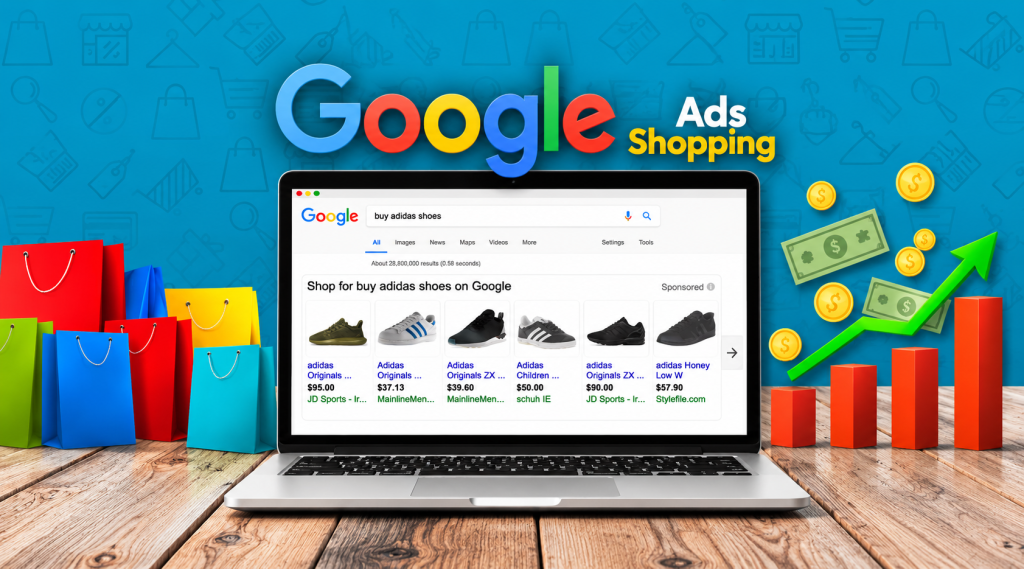
Google Shopping Ads are designed mainly for ecommerce businesses.
They can show product information to people searching for products.
Shopping campaigns can involve:
- Product feeds
- Product names
- Product images
- Prices
- Product information
- Product categories
- Conversion tracking
The product feed is important because Google uses product information to understand what is being promoted.
Shopping Ads are not necessary for every business. They are more relevant to businesses that sell products online.
Google Display Ads
Display advertising uses visual ads across websites and other Google advertising placements.
Search advertising often targets active searches. Display advertising can reach people through audience and placement-based targeting.
Display campaigns can support goals such as:
- Brand awareness
- Audience reach
- Remarketing
- Product promotion
For example, a business may use remarketing to reconnect with people who previously visited its website.
Performance Max Campaigns
Performance Max is a Google Ads campaign type designed to help advertisers reach customers across Google’s advertising channels.
A campaign can use different assets and conversion goals.
These campaigns may involve:
- Text
- Images
- Videos
- Audience signals
- Conversion goals
- Product information
Performance Max can be useful for some businesses and goals.
However, it should not be treated as a guaranteed replacement for Search campaigns. The right campaign type depends on the business and its objectives.
Google Ads Conversion Tracking
Conversion tracking is one of the most important parts of PPC management.
A conversion is a valuable action that happens after an ad interaction.
Examples include:
- Buying a product
- Submitting a lead form
- Calling a business
- Signing up
- Downloading a file
Tracking these actions helps businesses understand campaign performance.
For example, a campaign may receive many clicks but few leads. Another campaign may receive fewer clicks but produce more useful actions.
That difference matters.
Businesses should not judge campaigns only by traffic. They should also measure what happens after the click.
Google Ads Keyword Research
Keyword research helps an agency understand what potential customers search for.
The goal is not to collect as many keywords as possible.
The goal is to find relevant searches that match the business.
Important areas include:
- Search intent
- High-intent searches
- Relevant keywords
- Match types
- Negative keywords
- Search terms
- Competitor research
Example: Plumber
Imagine a plumbing company serving a US city.
Potential searches could include:
- plumber near me
- emergency plumber
- residential plumber
- local plumbing service
Each search has a different level of intent.
The agency should connect keywords with the actual services offered.
Google Ads Landing Pages
A landing page is the page people reach after clicking an ad.
It should match the message in the advertisement.
A strong landing page may include:
- Relevant headline
- Clear offer
- Strong call to action
- Mobile-friendly design
- Fast loading
- Trust signals
- Simple forms
- Contact information
For example, an ad for roof repair should ideally lead to a roof repair page.
A relevant landing page can create a clearer path from search to action.
Google Ads Budget
There is no single Google Ads budget that works for every business.
Ad costs can vary based on:
- Daily budget
- Monthly ad spend
- Cost per click
- Competition
- Location
- Industry
- Keyword demand
- Campaign goals
A competitive US market may have different costs from a smaller local market.
Your budget should also match your business goals.
Do not assume that a larger budget automatically creates better results.
Good tracking and campaign management matter too.
How Much Does a Google Ads Agency Cost?
Google Ads agency pricing can vary widely.
There is no universal agency price that applies to every business.
Common pricing models include:
- Monthly management fee
- Percentage of ad spend
- Fixed project fee
- Hourly consulting
- Setup fee
- Custom pricing
The total cost may include:
Agency fee + Google ad spend + possible landing page or tracking costs
Before hiring an agency, ask exactly what the fee covers.
Also ask whether setup, reporting, landing page work, and tracking are included.
If an agency provides a current pricing quote, check what services are included before comparing it with another agency.
Google Ads Agency vs Freelancer
Both agencies and freelancers can manage PPC campaigns.
The best option depends on your needs.
| Agency | Freelancer |
|---|---|
| May have several specialists | Usually one main specialist |
| Can handle larger workflows | Often offers direct communication |
| May provide several services | May focus on specific tasks |
| Often uses structured processes | Process varies by freelancer |
| Pricing can vary | Pricing can vary |
There is no universal winner.
Look at experience, communication, reporting, account access, and the services you need.
Google Ads Agency vs Doing PPC Yourself
Some businesses manage Google Ads in-house.
DIY PPC
The business manages:
- Keywords
- Ads
- Budgets
- Tracking
- Optimisation
- Reporting
This approach gives the business direct control.
But it also requires time and PPC knowledge.
Agency Management
An agency can manage these tasks for the business.
This can reduce the workload for business owners and internal teams.
However, professional management does not guarantee better results.
The agency still needs the right strategy, data, budget, offer, website, and tracking setup.
Benefits of Working With a Google Ads Agency
A professional PPC agency can provide several practical benefits.
Saves Management Time
Campaign management can take regular attention.
An agency can handle many daily and weekly tasks.
Provides Campaign Expertise
Experienced PPC professionals understand campaign structure, targeting, bidding, and tracking.
Helps Organise Account Structure
A well-organised account can make campaigns easier to manage and review.
Supports Conversion Tracking
Proper tracking helps connect advertising with business actions.
Provides Ongoing Testing
An agency can test ads, keywords, targeting, and landing pages.
Provides Performance Reporting
Regular reports can help business owners understand campaign progress.
Helps Identify Wasted Spend
Search term reviews and campaign analysis can help identify irrelevant traffic and weak areas.
These benefits do not mean every agency will produce the same results.
Always review the agency’s process before signing a contract.
Who Can Use Google Ads?
Many types of businesses can use Google Ads.
Examples include:
- Local businesses
- Ecommerce stores
- SaaS companies
- Service businesses
- B2B companies
- Startups
- Professional services
- Online businesses
The campaign strategy should match the business model.
A dentist may focus on local leads. An online store may focus on product sales.
A SaaS company may focus on sign-ups or demos.
Google Ads for Small Businesses
Small businesses often need careful budget control.
A focused campaign can help avoid spending money on unrelated searches.
Small businesses may consider:
- Local targeting
- High-intent keywords
- Call tracking
- Lead forms
- Relevant landing pages
- Conversion tracking
Measurement becomes even more important when budgets are limited.
A business should know what actions its ads are generating.
Google Ads for Ecommerce
Ecommerce businesses can use Google Ads to promote products and drive online sales.
Important areas include:
- Shopping campaigns
- Product feeds
- Product pages
- Conversion tracking
- Product categories
- Remarketing
- Revenue measurement
The campaign should connect with real ecommerce goals.
For example, revenue and purchase data can be more useful than clicks alone.
Google Ads for Local Businesses
Local businesses can use Google Ads to reach customers in specific areas.
Important areas include:
- Location targeting
- Local search intent
- Phone calls
- Lead forms
- Service areas
- Location assets where applicable
Examples include:
- Plumbers
- Dentists
- Roofing companies
- Lawyers
- Cleaning services
- HVAC companies
The campaign should target areas where the business can actually serve customers.
How to Choose a Google Ads Agency
Choosing an agency requires more than looking at promises.
Look for:
- Clear pricing
- Transparent reporting
- Conversion tracking
- Relevant experience
- Clear campaign strategy
- Regular communication
- Account ownership
- Realistic expectations
- Clear optimisation processes
Ask potential agencies these questions:
- How will you measure conversions?
- Who owns the Google Ads account?
- How often will you optimise campaigns?
- What will monthly reports include?
- How do you handle wasted ad spend?
- How will you test campaigns?
- What access will I have?
A trustworthy agency should answer these questions clearly.
Google Ads Agency Red Flags
Be careful when an agency makes unrealistic promises.
Warning signs include:
- Guaranteed Google rankings
- Guaranteed sales
- Guaranteed ROI
- No account access
- No conversion tracking
- Unclear fees
- No reporting
- Fake case studies
- Extremely broad promises
- Long contracts with unclear terms
Google Ads can produce useful business results, but no agency can control every auction or customer decision.
Clear expectations are better than big promises.
How a Google Ads Agency Manages a Campaign
A good PPC process usually has several steps.
Step 1: Business Research
The agency learns about the business, customers, products, services, and goals.
Step 2: Account Audit
If an account already exists, the agency reviews its current setup and data.
Step 3: Keyword Research
The agency identifies relevant searches and search intent.
Step 4: Campaign Setup
The agency builds campaigns and ad groups based on the strategy.
Step 5: Ad Creation
The agency writes relevant ad copy and adds required assets.
Step 6: Tracking
Conversion tracking is checked or configured.
Step 7: Launch
The campaigns go live with controlled settings.
Step 8: Optimisation
The agency reviews campaign data and makes changes.
Step 9: Reporting
The agency explains performance and recommends next actions.
This process can vary based on the business and campaign type.
Google Ads Metrics to Track
Clicks alone do not tell the full story.
Businesses should track metrics connected to their goals.
| Metric | What It Shows |
|---|---|
| Impressions | How often ads were shown |
| Clicks | How many users clicked |
| CTR | How often users clicked after seeing an ad |
| CPC | Average cost per click |
| Conversions | Valuable actions completed |
| Conversion Rate | Percentage of clicks that converted |
| Cost Per Conversion | Average cost for a conversion |
| Conversion Value | Value assigned to conversions |
| ROAS | Revenue compared with ad spend |
The most useful metrics depend on the campaign goal.
An ecommerce company may focus on revenue and ROAS.
A local service business may care more about qualified leads and calls.
Common Google Ads Mistakes
Several mistakes can reduce campaign efficiency.
Poor Keyword Research
Irrelevant keywords can attract the wrong users.
No Negative Keywords
Without negative keywords, some searches may be unrelated to the offer.
Weak Ad Copy
Unclear ads may fail to communicate the value of the offer.
Poor Landing Pages
A weak page can make it harder for visitors to take action.
No Conversion Tracking
Without tracking, it becomes harder to measure real campaign value.
Wrong Location Targeting
Ads should reach areas where the business can serve customers.
Poor Budget Control
Campaign budgets should match business goals and available resources.
Ignoring Search Terms
Search term data can reveal both useful and unwanted traffic.
No Testing
Campaigns need testing to learn what works.
Focusing Only on Clicks
Traffic does not always equal business value.
Sending All Traffic to One Page
Different searches may need different landing pages.
Google Ads vs SEO
Google Ads and SEO both help businesses reach people through Google.
But they work in different ways.
| Google Ads | SEO |
|---|---|
| Paid advertising | Organic search |
| Can generate paid traffic after launch | Usually takes time to build |
| Requires ad spend | Does not pay Google per organic click |
| Campaign-based | Content and website-based |
| Budget controls paid exposure | Rankings depend on many factors |
Businesses do not always need to choose one.
Google Ads can support immediate paid search activity. SEO can build organic visibility over time.
Using both can make sense for some businesses.
Frequently Asked Questions
What is a Google Ads agency?
A Google Ads agency manages paid advertising campaigns for businesses. Its services may include keyword research, campaign setup, ad creation, conversion tracking, bidding, testing, reporting, and optimisation. The agency manages the campaigns, while the business pays Google for its advertising spend.
What does a Google Ads agency do?
A Google Ads agency plans and manages PPC campaigns. It can research keywords, create ads, set budgets, manage targeting, review search terms, track conversions, test campaigns, and report results. The exact services depend on the business and its advertising goals.
How much does a Google Ads agency cost?
Agency costs vary based on the services, campaign size, business needs, and pricing model. Agencies may charge a monthly fee, percentage of ad spend, project fee, hourly rate, or setup fee. Google ad spend is usually separate from the agency’s management fee.
Is Google Ads good for small businesses?
Google Ads can be useful for some small businesses. Local targeting and high-intent keywords can help focus limited budgets. However, results depend on the market, offer, competition, website, tracking, and campaign setup. Small businesses should measure conversions instead of focusing only on clicks.
What does Google Ads management include?
Google Ads management may include campaign strategy, keyword research, campaign setup, ad creation, negative keywords, bidding, conversion tracking, search term reviews, testing, reporting, and optimisation. The exact scope depends on the agency’s service package.
How does Google Ads conversion tracking work?
Conversion tracking measures valuable actions after people interact with an advertisement. These actions can include purchases, forms, calls, sign-ups, and downloads. Tracking helps businesses understand which campaigns, ads, and keywords contribute to useful actions.
What is PPC management?
PPC management means planning, running, monitoring, and improving pay-per-click advertising campaigns. For Google Ads, this can include keyword research, ads, bidding, budgets, targeting, conversion tracking, testing, and reporting.
What is the difference between Google Ads and SEO?
Google Ads is paid advertising, while SEO focuses on organic search visibility. Google Ads requires advertising spend. SEO does not charge Google for each organic click, but building organic visibility usually takes time and ongoing website work.
How long does it take to optimise a Google Ads campaign?
There is no fixed optimisation timeline for every campaign. An agency needs enough useful data to evaluate performance. The timeline can depend on traffic, conversions, budget, campaign type, competition, and business goals.
How do I choose a Google Ads agency?
Look for clear pricing, transparent reporting, conversion tracking, relevant experience, account ownership, communication, and realistic expectations. Ask how the agency will measure conversions, manage ad spend, test campaigns, and report results.
Conclusion
A Google Ads agency can manage the complex parts of paid search advertising.
Its work may include keyword research, campaign strategy, ad creation, bidding, tracking, testing, and reporting.
Conversion tracking is especially important. It helps businesses understand what happens after someone clicks an ad.
Before hiring an agency, check its process, pricing, reporting, account access, and expectations.
The best agency choice is not about the biggest promise. It is about finding a team that understands your business and manages your campaigns with clear goals and useful data.